Best Books on Setting Boundaries (2026) - 24 Life-Changing Reads
Setting boundaries is an important skill that everyone needs. Books about setting boundaries can teach you how to say no and feel better.
Learning to establish boundaries in different areas, like work, relationships, and family, can make a big difference in your life. It’s not just about rules but also about respecting your own needs.
Knowing how to set boundaries with parents, in-laws, kids, and friends. Books on boundaries can show you steps for recovery and self-help.
In your relationships, understanding the difference between love and control can help you develop better emotional health.
Setting boundaries in marriage, with your boyfriend or girlfriend, or even at work, helps you avoid feeling overwhelmed.
These skills can improve your well-being and create better relationships. Boundaries are a golden rule for respecting yourself and others.
Some notable books included here are Beyond Boundaries, Boundary Boss, I Do Boundaries, Better Boundaries, Boundary Power, and Boundaries Workbook.
Setting better boundaries is critical. If you want to get better at setting boundaries, remember these 5 rules:
- Make your boundaries clear
- Don’t set boundaries you’re not willing to enforce
- Give rewards and praise when your boundaries are respected
- Don’t expect others to automatically respect your boundaries
- Be clear about why you maintain boundaries

Discover the best books on setting boundaries in relationships, at work, and with family. Learn how to say no, establish limits, and feel better. Gain skills to create healthy connections for adults and children
1. Beyond Boundaries

- Reinstate closeness appropriately with someone who broke your trust
- Discern when true change has occurred
- Reestablish appropriate connections in strained relationships
- Create a safe environment that helps you trust
- Restore former relationships to a healthy dynamic
- Learn to engage and be vulnerable in a new relationship as well
2. Boundary Boss

- How to recognize when your boundaries have been violated and what to do next
- How your unique “Boundary Blueprint” is unconsciously driving your boundary behaviors and strategies to redesign it
- Powerful boundary scripts so that, at the moment, you will know what to say
- How to manage “Boundary Destroyers”―including emotional manipulators, narcissists, and other toxic personalities
- Where you fall on the spectrum of codependency and how to create healthy, balanced relationships
3. I Do Boundaries

- How do I gain control of my life, schedule, and emotions? +
- How do I confidently set boundaries and let others know them?+
- How do I communicate my boundaries without fear of rejection or loss of friendship? +
- How do I remove people who are behaving poorly from my life?+
- How do I protect what matters most to me without regret?
4. Better Boundaries

5. Boundary Power

- clear definition of all boundaries as they relate to you relationally, spiritually, physically, sexually, and emotionally
- where you learn boundaries, the different kinds of boundaries, and the types of people with boundary problems
- Key questions to help you discover your own boundary problem
- exercises that will help you resolve losses associated with abuse
- exercises that will help you set clear, healthy boundaries in all your relationships
6. Where to draw the line

7. Boundaries workbook
- Why do I feel guilty about setting clear boundaries?
- What if the boundaries I set hurt the other person?
- Why is it difficult for me to hear no from others?
- What are examples of legitimate boundaries I can set at work and at home?
- How can I have good boundaries online and with social media?
- Can I stay connected while still setting boundaries with my phone?
8. Boundaries

- Can I set limits and still be a loving person?
- What are legitimate boundaries?
- How do I effectively manage my digital life so that it doesn't control me?
- What if someone is upset or hurt by my boundaries?
- How do I answer someone who wants my time, love, energy, or money?
- Why do I feel guilty or afraid when I consider setting boundaries?
- How do boundaries relate to mutual submission within marriage?
- Aren’t boundaries selfish?
9. Dodging Energy Vampires

10. The Power of No

11. Understanding the Borderline Mother by Christine Ann Lawson
"Understanding the Borderline Mother: This book is suitable for ordinary people to understand the parent-child relationship.
Although the mainstream media often say how much parents love their children, there are indeed some parents who are unable to love their children, such as borderline parents and parents in a state of depression.
Love is the ability to give a sense of security; how can you give others a sense of security when you are in a panic?
Borderline means that the mental state of the patient is between psychosis and neurosis. Psychopaths have no reality-testing ability, while neurotic patients have good jobs, self-care abilities, self-reflection abilities, and interpersonal relationships, but they have inner conflicts and many problems. Unpleasant feeling.
The borderline type is in between. Although they do not lose their minds, they are very unstable, and their emotions change very quickly.
Children of borderline parents often feel that their parents are inconsistent and confusing when they grow up, so they are at a loss and difficult to understand their Parents and the world. Like a small boat floating on the sea in a storm, they cannot be anchored without a lighthouse and feel fragmented.
Because of the experience of being abandoned, borderline parents will be extremely afraid of being abandoned again, so they will desperately control their children.
The internal rules of the family are vague and rigid and sometimes threaten to abandon their children to achieve their own control. They will also have inexplicable anxiety, and it is difficult to see the child for real, but live in their own world.
Although the book specifically describes four types of borderline mothers- wanderer, recluse, queen, and witch- they all have the above characteristics.
If you feel that your relationship with your parents makes you miserable, you can read this book to learn how to save yourself and maintain your own psychological space.
12. Recovering from Emotionally Immature Parents by Lindsay C. Gibson
"Recovering from Emotionally Immature Parents " lists many characteristics of immature parents, such as self-centeredness, emotional coercion, meanness, and even abuse of children.
After reading the whole book, I feel that my parents are not particularly immature but rather have a strong desire for control, and the excessive desire for control is not self-centered, but they feel from the bottom of their hearts that they are thinking about their children.
It may be out of the fear of the child going the wrong way, thinking that the child has little social experience, and has a very serious thought of "crossing the bridge to eat rice".
The second is that not only our parents, our partners, and even ourselves are immature. When we judge a person's maturity, we are usually expressing a feeling, but this book has helped me recognize specific behaviors that are outward signs of immaturity.
For example, imposing one's own wishes on others and not caring about other people's feelings. PUA in some relationships and in the workplace is actually a manifestation of the immaturity of the controller.
The third is that some of the methods mentioned in the book can be used for reference, but they need to be localized in combination with Chinese-style family relationships.
Because China is a society that pays special attention to filial piety, parents will not only coerce emotionally but also kidnap them morally. Disobedience to the wishes of parents will be labeled as "unfilial", which is a very serious "crime".
Therefore, even if many children become adults, they cannot truly mature and cannot have self-will. Because they feel that it is against morality to have a bad relationship with their parents.
A kind, sensitive, and flattering person always expects to have harmonious social relationships and hates interpersonal conflicts.
Fourth, the goal of fighting against immature parents is to change every current interaction, free yourself from parental control, and let your inner self come alive.
As for whether the parent-child relationship can be improved, it is not the goal of confrontation. That said, accept the fact that your relationship with your parents may never be perfect.
13. Coping with Critical, Demanding, and Dysfunctional Parents by David M. Allen
"Coping with Critical, Demanding, and Dysfunctional Parents: Do you have a parent who is invalidating, critical, demanding, or hateful? In this important and much-needed guide, you’ll learn how to set boundaries, uncover the hidden motives behind your parents’ behavior, put a stop to repetitive, hurtful interactions, and foster healthier relationships.
There’s no sugarcoating it—if you grew up with a parent who made you feel invalidated or unloved as a child, your pain is very real.
In some cases, you may decide that you want to remove this parent from your life, and that is a valid choice.
But for many people, dealing with a problem parent becomes a necessary part of life, for whatever reason. If you’re one of these people, this book can help.
Written by a psychotherapist and expert in relationships, Coping with Critical, Demanding, and Dysfunctional Parents will help you develop unique assertiveness strategies based on the characteristics of your own family dynamics.
You’ll learn powerful communication skills to help you build boundaries and put a stop to your parents’ hurtful behavior. And, most importantly, you’ll learn to advocate for your own needs.
If you’ve “had it up to here” with a parent who makes you feel as though you’re just not good enough, this invaluable guide can help you put an end to toxic interactions while maintaining peace in your family.
14. Children of the Self-Absorbed by Nina W. Brown
"Children of the Self-Absorbed: It took me two weeks to read this book carefully. I thought it was just an ordinary book similar to Chicken Soup for the Soul. After reading it, I realized that it is actually a very practical book that can heal wounds or a kind of parenting book.
Test questions and various scales. If you carefully complete each of the questions and carefully read each section of analysis after the questions, you will find that the process of reading this book is also a process of your gradual growth. You will know how to treat your parents and your children.
As adults, we must have thought about the question of "why we become ourselves" at some point.
Many people say that genetics are really amazing. You don't like the way your parents treated you, but you accidentally treat your children in the same way or go to the opposite extreme.
"Children of the Self-Absorbed" analyzes in detail each character, the influence of parents on you, and how you can avoid being hurt.
The most influential aspect of this book is that I should start to learn to do what I like and know how to say no to what I don’t like to do. I have always felt that the greatest happiness in life is "I can always show the state of what I should do".
In fact, many of us can't be so free and easy in many cases. You find yourself often doing things that go against your original intention.
In things, our brains are imperceptibly subjected to a strange force to urge us to do it (in fact, no one coerces you at all), and when we do it, we feel restless and painful.
It turns out that this situation comes from the influence of your original family, from your parents. If you don’t gradually change yourself fundamentally to guide your children, this kind of influence will continue to the next generation or even a few years later. generation.
This fully proves that the so-called "character inheritance" of children is actually the influence of acquired parents on children.
Through the book "Children of the Self-Absorbed", we understand that "parents not only give us love, but may also hurt us", and knowing the aspects of parents' influence on our character development,
We can use some of the ideas in this book to successfully resolve the conflicts between ourselves and our parents and better handle the relationship with parents, with oneself, and with others.
15. Children of the Aging Self-Absorbed by Nina W. Brown
"Children of the Aging Self-Absorbed: Growing up with a self-absorbed parent is difficult, and they may become more difficult to deal with as they age.
This essential book shows how to cope with your aging parent's narcissistic behavior and provides tips to help protect yourself and your children from their self-absorbed, destructive actions.
As your self-absorbed parent grows older and becomes more dependent on you, hurtful relationships may resurface and become further strained.
In the tradition of Children of the Self-Absorbed, author Nina Brown offers the first book for adult children of aging narcissistic or self-absorbed parents.
You will learn practical, powerful strategies for navigating the intense negative feelings that your parents can incite, as well as tips to protect your children from the criticism, blame, or hostility that may exist between you and their grandparents.
In this book, you will gain greater awareness of how and why your parent's self-absorbed behaviors and attitudes get worse and develop strategies to manage the negative feelings that can arise as a result.
You'll also learn to reduce the shame and guilt that may be felt when you feel like you don't want to be a caretaker.
Finally, you'll learn to set limits with your parent so you can stay sane during this difficult time.
Having an aging parent can be stressful enough, but dealing with an aging narcissistic or self-absorbed parent is especially challenging. This essential guide will help you through.
16. Setting Boundaries with Your Aging Parents by Allison Bottke
"Setting Boundaries with Your Aging Parents: This important book from the author of Setting Boundaries® with Your Adult Children (more than 40,000 sold) will help adult children who long for a better relationship with their parents but feel trapped in a never-ending cycle of chaos, crisis, or drama.
With keen insight and a passion for empowering adult children, Allison charts a trustworthy roadmap through the often unfamiliar territory of setting boundaries with parents while maintaining personal balance and avoiding burnout.
Through the use of professional advice, true stories, and scriptural truth, readers learn how to apply the "6 Steps to SANITY":
- S- STOP your own negative behavior
- A- ASSEMBLE a support group
- N- NIP excuses in the bud
- I- IMPLEMENT rules and boundaries
- T- TRUST your instincts
- Y- YIELD everything to God
17. Healthy Boundaries by Chase Hill
"Healthy Boundaries: Do you ever wonder what it would be like if the people you care about respected your personal space?
Do you wish that there was an easy way to say “No” every time you don’t want to say “Yes”?
Or do you simply want to pursue self-love and not feel guilty about it?
If this is you, then you’ve probably had moments of trying to please others - often, to your own detriment.
Perhaps you cannot say “No” because you don’t want to disappoint or anger the other person, leading you to do things you never wanted to do in the first place.
If this happens too often, eventually, people will start taking you for granted - and you won’t be taken seriously even when you try to say “No.”
What’s worse, when you do try to set up boundaries, people will label you as mean or moody. It will seem impossible to make people respect your decisions without starting a conflict.
But there’s a simple way to solve your problems!
You can start doing what YOU want to do.
You don’t have to compromise your individuality just to be “considerate” of others.
You can set healthy boundaries and make your friends, family, and parents respect those boundaries.
In Healthy Boundaries, here’s just a taste of what you’ll discover:
- A step-by-step guide to setting healthy personal boundaries without starting an argument
- 5 dangerous mistakes you must avoid when setting boundaries
- The secret to saying “No” without feeling guilty - and without being misunderstood
- How to stop constantly apologizing and find out when you should and shouldn’t be sorry
- 10 debilitating myths that are stopping you from setting up boundaries - and how to troubleshoot them
- How to detoxify your emotions and release toxicity from your system like a breath of fresh air
- How to handle these 6 different relationship types (you’re in one of them right now)
- A clear path to give you the freedom to love yourself, follow what YOU want, and prioritize yourself
And much more.
Setting up boundaries isn’t about being rude; it's about acknowledging that your well-being comes first.
When you feel good, everything around you will be affected positively - including the people you care about.
You don't have to shield everyone else from pain anymore - realize that you’re the one who’s hurting, and do something about it.
18. Boundaries with Parents and In-Laws by Micah Stephens
"Boundaries with Parents and In-Laws: A small but concise booklet on how to eliminate drama by setting boundaries with troublesome behavior.
No matter if your parents or in-laws are healthy or toxic, these guidelines will protect you from disrespectful, devaluing, and controlling behaviors that add so much stress and tear apart marriages.
Be warned, your relationships with your parents and in-laws will either be strengthened or fall apart from using these guidelines, depending on whether they are healthy enough to be in your life.
19. Setting Boundaries with Your Adult Children by Allison Bottke and Carol Kent
"Setting Boundaries with Your Adult Children: What parent doesn’t want their children to grow up to be happy, responsible adults? Yet, despite parents’ best efforts, most heartfelt prayers, and most loving environments, some kids never successfully make the transition to independently functioning adulthood.
Following her own journey, Allison Bottke developed a tough-love approach to parenting adult children that helps both you and your child by focusing on setting you free from the repeated pain of your adult child’s broken promises, lies, and deception.
Setting Boundaries® with Your Adult Children offers practical hope and healing through S.A.N.I.T.Y.—a six-step program to help parents regain control in their homes and their lives.
- S = STOP Enabling, STOP Blaming Yourself, and STOP the Flow of Money
- A = Assemble a Support Group
- N = Nip Excuses in the Bud
- I = Implement Rules/Boundaries
- T = Trust Your Instincts
- Y = Yield Everything to God
As you love your child with arms and heart wide open, know that no matter what happens, you are never alone. God is in control and will be with you.
20. Healthy Boundaries by James G. Hanley
21. Boundaries: Where You End and I Begin by Anne Katherine M.A.
22. Boundaries in Marriage by Henry Cloud, John Townsend
23. Boundaries in Marriage Workbook by Henry Cloud, John Townsend
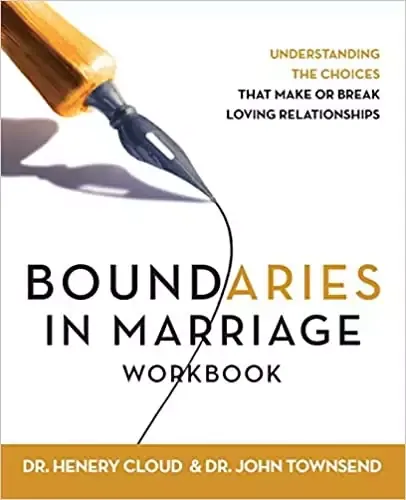
- Set and maintain your personal boundaries and respect those of your spouse
- Establish values that form a godly structure and architecture for your marriage
- Protect your marriage from different kinds of "intruders"
- Work with a spouse who understands and values boundaries, or work with one who doesn't
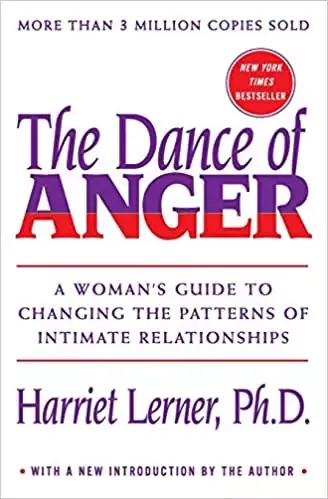
24. The Dance of Anger by Harriet Lerner
Conclusion
In conclusion, learning to set boundaries is a crucial skill for maintaining healthy relationships and improving overall well-being.
By understanding the importance of saying no and respecting your own needs, you can create a balanced life.
Whether it's with family, friends, or at work, setting clear boundaries helps you protect your emotional health and build stronger connections.
With the right books, you can establish the boundaries that are necessary for a happier, more fulfilling life.
Parents and family relationships are the interpersonal relationships we are born with, and as a kind of interpersonal relationship, we need to have a healthy way of getting along.
From the beginning, the author made a clear point:
Only when you set limits with your parents can you truly grow up.
The first relationship we face when we are born is the love between our parents, and at different ages, we get along with our families in different ways.
For example, when we are young, we rely on our parents in all aspects of life. At this time, we need to pay attention to the fact that children also have boundaries; when we start school, we will be exposed to other types of interpersonal relationships; during adolescence, we will develop a sense of privacy.
As adults, the way we get along with our parents will also change, and our relationship with our parents is constantly changing.
Whether you're looking for practical advice, personal stories, or a more theoretical approach, there are likely few books on setting boundaries with controlling parents on this list that will resonate with you.
If you're looking for guidance on setting boundaries with your children, there are many excellent books available on the subject.
Here are some popular books on boundaries for parents that you may want to consider:
🌱 This post is part of our Personal Growth Hub — featuring the best books on productivity, mindset, emotional intelligence, resilience, and success.