Best Books for Women's Psychological Growth: By Life Stage (2026)
Understanding female psychology isn't about memorizing theories. It's about recognizing how biology, culture, relationships, and lived experience shape a woman's mind across each decade of life.
The best books on female psychology and understanding women's growth don't just explain behavior; they offer a mirror. They help you understand why you react, what you need, and how to heal. Unlike early male-centered theories (Freud included), modern feminist psychology includes social pressure, discrimination, race, and personal history.
This guide is organized by life stage. Whether you're 18 or 60, you'll find books matched to where you are right now, not where someone thinks you should be.

Foundation Years: Identity & Emotional Literacy (Ages 18–22)
Identity formation, first independence, and early feminist awakening
These books help you ask who you are before the world tells you who to be. They build the emotional vocabulary you'll use for a lifetime.
- Slouching Towards Bethlehem: Essays — Joan Didion
- A Vindication of the Rights of Woman — Mary Wollstonecraft
- The Feminine in Fairy Tales — Marie-Louise von Franz
- Eleanor & Park — Rainbow Rowell
- The Fault in Our Stars — John Green
- Felix Ever After — Kacen Callender
- Turtles All the Way Down — John Green
- We Were Liars — E. Lockhart
- Little Women — Louisa May Alcott
- 13 Reasons Why — Jay Asher (with trigger warning)
1. Slouching Towards Bethlehem: Essays

Slouching Towards Bethlehem by Joan Didion
"Everything disintegrates, and the center is difficult to maintain."
This line is printed on the cover of The Trek to Bethlehem and is also an excerpt from Yeats' poem on the frontispiece. What's so strange about the disintegration of things from our current perspective? It seems an indisputable fact that the center is difficult to maintain. If the 1960s were the beginning of the collapse of traditional American values, then the United States today may be more chaotic in our eyes.
As a type of "non-fiction writing", this book is not refreshing, but its charm is not diminished. As a regular reader, Joan Didion's achievements can only be glimpsed in the introduction on the back cover. "Contemporary American cultural icon; recognized chronicler of the hippie era; National Book Award in 2005; National Medal of Humanities awarded by the U.S. government in 2013..."
There is no real sense of weight when these honors are turned into words. What attracts me is her sensitive, calm words, which are neither a sharp scalpel nor a brush with additions and deletions, but rather like meticulous photography. The work, which freezes a certain moment, can be zoomed in and out, zoomed in on the details, and imagined the story, but it does not evaluate and guide.
The last point is especially valuable, whether in the description of events, characters, and places, Joan writes about confusion, absurdity, and stagnation. From the hippie movement in San Francisco's Haight-Ashbury district, the legend of Howard Hughes unfolding at 7000 Roman Street in Los Angeles, to the fantasy of Hawaii and the incongruity of the hot pink cruise ship to Pearl Harbor. She doesn't hide in her text, but you can't see her nodding or shaking her head or frowning.
I think I still need sufficient background knowledge to better understand the United States in the 1960s. "Compromise to Disorder" is Joan Didion's way of writing for herself. Collapse and disorder are problems faced by every era. She said that in the writing of "Traveling to Bethlehem", "the first direct and candidly touch and describe the basis for everything dissipating..." but after publication, "still failed to make many readers who read or like this article understand what I mean...".
Looking back half a century later, the reality at that time has become history in the eyes of today's people, and writing is meaningful at that time and now. If you don't distinguish or examine what is happening, one day, disorder will turn into nothingness. The disorder is an existence that can still be described by words. In front of nothingness, words lose their power.
2. A Vindication of the Rights of Woman

A Vindication of the Rights of Woman by Mary Wollstonecraft
I still think Mary Wollstonecraft is subconsciously misogynistic. In the preface, she said that she disdained scrutinizing words, modifying the style of writing, and not clinging to words. But actually, I feel like she can't get rid of it. The entirety of "A Defense of Feminism" focuses on superficial real-life examples without going back to the source to explore history - where does this kind of cultural practice come from? How is it formed? What is the system that guarantees such cultural habits? How is it guaranteed?
In this case, she has begun to accuse women of being stupid and weak. (Of course, she used something like "I insist that men make women worse.") But how? She said over and over again, "Strengthen their knowledge, cultivate their rationality, and develop their morality." Maintaining spiritual freedom and making human beings more moral makes me feel too idealistic.
In addition, she focuses more on middle-class women, blaming/analyzing how their promotion of grace and beauty under the surface of privilege is detrimental to the overall (and her personal) interests of women.
On the one hand, it ignores the more general female group, and on the other hand, it criticizes these middle-class women, which never made me feel that as a woman, she recognizes women and this gender. But that doesn't mean it's an anti-feminist work; the book was published in 1792.
Those words that are said over and over again, "cultivating knowledge, strengthening true morality instead of grace, and cultivating spiritual freedom," seem strange to me now, and at the time were undoubtedly the precursors of feminism.
I agree with most of the views in this book. I think I need to think about a question now. I like the quality of gentleness, but Mary pointed out that the essence of gentleness and dignity is a kind of slavery. There are various opinions in society about the merits of women, resulting in the weakness and incompetence of the female characters.
I like it because "why not rule out the expression of intercourse with men, just as a human expression, gentleness will make people comfortable to get along with", but isn't this kind of thinking really not influenced by gender shaping? What are the qualities of femininity that are really needed?
3. The Feminine in Fairy Tales

The Feminine in Fairy Tales by Marie-Louise von Franz
The author of "Women in Fairy Tales", Marie Louise von Franz, is recognized as the most outstanding successor of Jung and the most authoritative representative of the psychological interpretation of fairy tales. After meeting Jung in 1933, when she was 18, she followed him until he died in 1961.
During this period, she not only applied the concepts and methods learned from Jung to the analysis of fairy tales, but also did psychological analysis for people, and analyzed 65,000 dreams in total. Dr. von Franz devoted his life to the development of Jung's analytical psychology and has more than 20 works; "Women in Fairy Tales" is one of them.
The book analyzes the hidden secrets in many fairy tales such as "Sleeping Beauty", "White Snow and Red Rose", "Girl Without Hands", "The Woman Who Becomes a Spider", "The Six Swans" and "Seven Ravens".
Throughout the ages, women's confusion, insecurity, and personalities have led them to have their own opinions. If we analyze and discuss the source, "Women in Fairy Tales" by Marie-Louis von Franz should give us some inspiration.
Dreams, myths, fairy tales, and other materials that we have come into contact with from childhood to the metropolis, the Jungian school attaches great importance to their symbolic meanings and regards them as important manifestations of archetypes at different levels of the collective unconscious. If each female character in the fairy tale is disassembled and analyzed, we will explore some ideas and the consciousness of female minds.
The book Women in Fairy Tales is very delicately printed. It analyzes the subtle and righteous words of fairy tales from the perspective of women and supplements the lack of one-sided mythological views of the national dream. Von Franz used Jungian psychology theory to dive into fairy tales, and his analysis was profound and convincing.
4. Eleanor & Park by Rainbow Rowell
- You should read this book because it's a beautiful mix of happy and sad feelings at the same time.
- The love story between Eleanor and Park is so lovely that it will make you smile like crazy while reading.
- Eleanor is a character you'll really like because she's different, not traditionally pretty, but very attractive in her own way. You'll feel for her because she goes through tough times, like bullying and harsh treatment from her stepdad.
- Even though the book is enjoyable, it might not be the absolute best you've ever read. You might feel a bit let down because you couldn't find deeper meanings in the story.
- Seeing the author's photos might make you wonder if she's writing her own story, adding an extra layer of intrigue to the book.
5. The Fault in Our Stars by John Green
- Love means keeping promises, even when you might not fully understand them at first.
- This book talks about love simply and clearly, and that makes sense.
- It also mentions how important it is to accept the ups and downs of life, just like on a swing set.
- The characters in the book express their feelings honestly, without hiding anything.
- Even though there are sad parts, the book shows that it's okay because it's part of life, and it's still worth it to love and be loved.
6. Felix Ever After by Kacen Callender
- The book has very detailed descriptions of scenes and characters' emotions, making it easy to imagine the story.
- The writing is simple yet powerful, making the story feel genuine and heartfelt.
- The plot can be predictable, and characters sometimes seem too quick to get angry or fall in love, which can feel unrealistic.
- It explores the experiences of a transgender teenager growing up and finding love, making it an interesting young adult novel.
- The story shows the challenges faced by transgender people in society, highlighting how tough their lives can be.
7. Turtles All the Way Down

Turtles All the Way Down by John Green
- "Turtles All the Way Down" by John Green is a great book to read if you like stories about personal growth and understanding yourself.
- The main character, Aza, struggles with OCD and fears germs, which makes her constantly clean a cut on her finger.
- The story shows how Aza deals with her mental health issues while managing her daily life.
- The book includes a unique philosophy called "turtles all the way down," which you will understand more after reading.
- This book can be especially helpful if you tend to overthink and want to see how someone else handles similar challenges.
8. We Were Liars

- "We Were Liars" is a pure fiction book that's enjoyable to read, but it has some dark themes and mentions self-harm.
- The story is about four cousins and friends who spend every summer together and call themselves "Liars."
- One summer, something big happens that changes all their lives and affects the main character deeply.
- The protagonist struggles with mental health issues and family problems, and the book shows how she deals with everything.
- It's a beautifully tragic story, but if you don't want to read something sad, you might want to skip this book.
9. Little Women

Little Women by Louisa May Alcott
- Little Women shows how important it is to be kind to others, especially in tough times.
- Follows the journey of four young girls and their mother as they navigate life without their father.
- Reading this book will make you feel warm inside and appreciate the love within families.
- Shows how the characters face challenges with bravery, inspiring readers to do the same.
- Little Women teaches the importance of accepting yourself for who you are, no matter the circumstances.
- This book is a great introduction to classic literature and will leave you feeling good and inspired.
10. 13 Reasons Why

The story tells that a girl who seemed popular with outsiders committed suicide very suddenly. She recorded a tape before her death, recording the stories of the 13 people who led her to commit suicide and ensuring that the tape would be transmitted to these 13 people one by one after her death.
The male lead is one of these 13 people. He can be considered a classmate independent of the female lead. In the recording of the confession, the male protagonist recalls the girl's previous life from his outsider's perspective, combining his hearing with the description of the environment in which he is currently listening to the recording.
The three main lines of the story are intertwined. The language is very different every day, but the story gives the story a more complete vision through these three main lines. Different from the usual suicide stories, the heroine is not a very negative person.
Even when she talks about the 7th and 8th people, she keeps emphasizing, "I never thought about suicide at this time, and I think suicide is a very incomprehensible thing". She is just a person who will not use proper methods to ask for help from the people around her after her psychological injury. From her descriptions, we can see that her world is slowly disintegrating. It is a thought-provoking counter-example of adolescence.
I watched it when I was 18 years old, and it might resonate a lot because of it. This is the first tragedy I have seen, but I think it was written wonderfully. Literary talent is everyday but very beautiful. Personally, I think it is very suitable for people who are just starting to read the original English books~ because the story is very compelling and compelling to keep reading.
Finally, I suggest that if you read it, you don't have to look through the dictionary for some words that you don't know. Looking through the dictionary will destroy the coherent enthusiasm for reading. I guess it's good to read it.
⚠️ Trigger warning: This book depicts suicide. If you are having thoughts of harming yourself, please contact a crisis hotline (988 in the US) or a mental health professional.
Emerging Adulthood: Autonomy, Relationships & Purpose (Ages 23–28)
Autonomy, romantic relationships, quarter-life crisis, career beginnings
You're out of school but not yet settled. These books guide you through first careers, real relationships, and the quiet panic of not having it figured out.
- Women Who Love Too Much — Robin Norwood
- Men Who Hate Women and the Women Who Love Them — Susan Forward
- Why Women Have Sex — Cindy Meston & David Buss
- Burnout — Emily Nagoski & Amelia Nagoski
- Severance: A Novel — Ling Ma
- Queenie — Candice Carty-Williams
- Adulting — Kelly Williams Brown
- The Lover — Marguerite Duras
- It's Called a Breakup Because It's Broken — Greg Behrendt
- Fear of Flying — Erica Jong
- What Women Want When They Test Men — Bruce Bryans
1. Women Who Love Too Much

Women Who Love Too Much: When You Keep Wishing and Hoping He'll Change by Robin Norwood
Typical experiences and typical characteristics of women who love too much (ROBIN NORWOOD):
- A typical case is that they all come from discordant families (including long-term quarrels and cold wars, single parents, or growing up away from their parents), and their emotional needs are not met.
- They seldom cared for themselves, trying to meet their unmet needs with special attention to others, especially to men who needed help in some sense.
- Since they don't get the caress and tenderness they crave from their parents, they react subconsciously to the "emotionally inaccessible man" they are familiar with, trying to change it with their own love.
- Because they are so afraid of being abandoned, they make every effort to prevent the relationship from breaking up.
- As long as they can "help" the men who live with them, they will do whatever they can, no matter how much effort they make, how much time they spend, and how much they pay.
- Since they are very familiar with the lack of love in their personal relationships, they are willing to wait and hope and make every effort to try to please each other.
- In their relationship with their partners, they are willing to take more than half of the responsibilities and faults.
- Their level of respect for themselves has dropped to the bottom line of danger. Deep down, they do not think they are entitled to happiness. They believe that they must fight for the right to enjoy life.
- They have a desperate need to control their partners and their relationships because they rarely experience security in childhood, and their attempts to control people and circumstances are positioned by them as "helpful".
- In a sense, their attitude toward relationships is more idealistic and dreamy than in real life.
- They are at the mercy of men and mental pain.
- They are mentally and physically more susceptible to drug, alcohol, and fixed food dependence.
- They are more inclined to be close to those who demand attention to their problems or get involved in the chaos that their spirits can't bear, while avoiding their responsibilities towards themselves.
Occasionally, I feel that there is no other way to solve these problems but to grow from the body.
2. Men Who Hate Women and the Women Who Love Them

Men Who Hate Women and the Women Who Love Them: When Loving Hurts, and You Don't Know Why by Susan Forward
In marriage counseling over the years, I have seen countless women who are living a very miserable life, and when they approached me for counseling, I thought they would take the opportunity to take a good look at what a relationship is all about, yet I hear more about expectations. But here it is: I want to know how to control my emotions. I want to increase my sense of security. I wonder how I can become insensitive.
When I asked them further why they had such expectations, they would say: It's mainly because the husband doesn't like it, and they don't feel good about it. In addition to the demands of their husbands, when their own parents, friends, and various articles kept telling them how to be better women, they began to doubt themselves further.
As a counselor who has worked in the field of marriage and emotions for many years, I know that there are not a few women who want to maintain relationship harmony by suppressing themselves. But if they were just accustomed to blaming themselves for all their problems, they could neither change themselves nor their marriages, and could only be stuck in a dilemma in a painful relationship.
They always feel like they can be better, but are frustrated by their inability to control or change themselves. In fact, the loss of emotional control, lack of security, and sensitivity to relationships seem to be their problems, but they are actually just a signal light in the relationship, revealing that there is a problem with their way of getting along.
Watching so many women become hysterical in their relationships and then have to blame themselves for their actions, the question often pops into my mind: Where is the happiness of women? What makes them unable to see their situation? How I wish there were a book that would allow them to look at relationships a little bit more, even if it were just starting from the tip of the iceberg. It might give them more opportunities to touch their real selves and relationships rather than blindly pursue fantasy relationships to hurt themselves.
Attachment: Why We Love So Humblely. The growth guide can also be used as an extended reflection on the evaluation case of professional consultants. I think when anyone who has more expectations for intimacy picks up this book, the most immediate change is not what they learn from the book, but starting to think about themselves through a large number of cases in the book, not just blindly. Denying oneself is the first step for anyone trying to get out of a painful relationship.
Many women who are in pain in their relationships think that if they change themselves first, or change their partner, things will get better! In fact, it's only when they take a step back from the relationship that they can get a clear picture of who you are, your marriage, and where your life is headed! When you see both the nature of the relationship and how you support such an unequal relationship, the power and strength of an individual in the relationship begin to be seen.
As the author puts it in the book: "Many people dare not look back at the root causes of their personalities and experiences, thinking that the past is gone, and looking back is tantamount to self-pity, immersed in old wounds and unable to extricate themselves. But self-discovery provides us with exciting new options, and the more we understand the causes of our own personality, the easier it will be to let go of our unintentional behaviors and attitudes."
No matter what situation you are in, only if you know enough about yourself and the relationship you are in will you begin to rebuild yourself and take back your rights as an adult in the relationship. When you can control yourself, you are ready to control your partner, because the ability to think independently without relying on another person is the premise for women to find their own happy life.
3. Why Women Have Sex

Why Women Have Sex: Understanding Sexual Motivations - From Adventure to Revenge by Cindy M. Meston
Have you ever liked your good friend's boyfriend? Have you ever tried to have a relationship with someone else's husband or wife because you want to keep a man who doesn't love you? Have you ever tried to have a relationship with someone else's husband or wife?
Whether it is now, in the past, or even in the long-term future, it is normal and legitimate for men and women to have a relationship. It's just that whether you really understand sex and whether you really get pleasure from sex, then it doesn't matter if you are a man or a woman. You can read the book "Women's Sexual Motivation".
The book starts with eleven chapters:
- How to sway a woman's heart,
- Why sex is so ecstatic,
- What is love,
- Conquer you like this;
- Envy of jealousy.
- Asynchronous sexual desire, whether to do it or not,
- A woman's curiosity.
- love business.
- Self-expansion.
- The dark side of love.
- Sex is like a panacea.
This book is based on interviews with many women from all over the world. The questionnaire survey, while drawing on the latest cutting-edge research of the Maston Sexual Psychophysiology Laboratory, compiled a total of 237 sexual motives from the perspective of evolution, physiology, clinical medicine, and psychology.
The psychological thoughts and behaviors of various girls are discussed in detail. It also makes people aware of different growth environments, and different girls have different emphases on this matter. People are still very flexible.
Throughout the book, some things surprised me. For example, girls are obsessed with body odor, subconsciously choosing a well-proportioned body, obsessed with the "inverted triangle", subconsciously judging whether the man is sexy through the voice line and voice, and in different periods, girls are obsessed with different types of boys. And the mystery behind this, the subconscious mind, just shows the unparalleled wisdom of women in mate selection. It's just that most of us don't know about it.
After reading it, the feeling is that whether it is for boys or girls, this is a kind of welfare. Help boys understand girls better and perceive the thoughts behind girls to learn how to get along with girls and please girls. On the other hand, it also makes girls' eyes shine.
The behaviors and actions that they usually don't pay much attention to are actually the same things, and they will also produce a sense of comfort that "it turns out that I am not alone," so that people can understand themselves better and accept themselves as much as possible. self.
4. Burnout

Burnout: The Secret to Unlocking the Stress Cycle by Emily Nagoski, Ph.D., and Amelia Nagoski, DMA
An unconventional self-help book: not only gives some ways to reduce stress, but also explains why women feel stressed in today's society from a patriarchal perspective. The biggest lesson this book taught me was to be aware of my own biases. As an Asian woman, she is the target of double discrimination in the West.
However, being anti-discrimination and thinking of myself as an equal, I also discriminate against fat people inadvertently, especially those close to me: For example, forcing family members to exercise and lose weight in the name of health, laughing at the belly of Target, etc. According to the author, this is sizeism as bad as racism and sexism.
It talks about some special psychological difficulties faced by women in many external and internal factors (e.g., patriarchy, body shaming, pleasing personality, etc.). A typical self-help book is not a good popular science book, mixed with various viewpoints and "prescriptions", but there is no in-depth discussion and structure; it feels like a blog article written to publish a book.
5. Severance: A Novel

- "Severance" by Ling Ma is a book about a pandemic, where a disease spreads, affecting everyone's lives.
- The story focuses on Candace Chen, a daughter of immigrants, who believes in the importance of work even during the pandemic.
- Candace stays committed to her job even when others stop showing up, reflecting on the pressures of capitalism in society.
- As she navigates through her job and life, Candace learns about the realities of living in a capitalist society, where dreams may not always align with reality.
- The book takes readers on a journey with Candace across the US, where she discovers important lessons about life and survival.
6. Queenie

Queenie by Candice Carty-Williams
- This book, Queenie by Candice Carty-Williams, shows how a young black woman in the UK deals with her mental health struggles.
- It talks about how trauma affects growing up and finding your path in life.
- The story emphasizes the importance of seeking help for mental health issues, like going to therapy.
- It helps break down the stigma around mental health and seeking help, making it feel more normal and okay to ask for support.
- The book shares experiences that many people go through, making it relatable and helpful for understanding your struggles.
7. Adulting

- The book Adulting by Niharika Gupta tells the story of three different people: Aisha, Ruhi, and Tejas.
- Aisha is a social media manager and blogger who struggles to keep up her image online.
- Ruhi is a workaholic who works very hard but feels unappreciated and never takes breaks.
- Tejas is a best-selling novelist who is dealing with writer's block.
- The story is about how these characters learn to understand themselves and what is truly important in life.
- It shows that becoming an adult is more about understanding your mind and values than just doing chores or moving out.
- The story is told from the perspectives of all three characters, which can be a bit confusing at first but gets easier as you read.
- Adulting is a beautiful book about personal growth and self-discovery, and it is worth reading to see how the characters navigate their challenges.
8. The Lover

The Lover by Marguerite Duras - I am so forgetful when I grow old, but I don't forget lovesickness
- The book tells a touching love story, showing deep feelings and emotions.
- It explores how beauty changes with age and finds value in different stages of life.
- The story shows how love can be surprising and timeless, even after many years.
- The book describes a personal encounter that leaves a lasting impression, highlighting meaningful connections.
- It ends with a message of forgiveness and fulfillment, making it a heartwarming read.
9. It's Called a Breakup Because It's Broken by Greg Behrendt and Amiira Ruotola-Behrendt

The latest book by Greg Behrendt, author of the multi-million-plus copy bestseller Just Not That Into You, is another hilarious, wry, and wise take on relationships and how to move on when one goes sour. 'He's Just Not That Into You is more than a book. It's a revolution.
The phrase, coined by Behrendt for an episode of Sex and the City, has now entered the language: it features in ads, it's referred to in newspaper headlines, and it has spawned spin-off spoof books and more.' It's Called A Break-up Because It's Broken promises to do this and more.
It will help you get over anyone and move on. Behrendt's voice is unique - combining tell-it-like-it-is advice with humor and the guy's eye view. The book is filled with solid advice to help you let go of your ex - for example: ' It's 3 a.m., the bottle of wine is empty, do you really want to make that call?'
Each insightful chapter is complemented by a Q-and-A with Greg on what he's thinking, case studies, and games. Greg and Amiira tackle tough issues such as break-up sex, how not to lose your friends during a break-up, and 10 great places to cry.
It's the ultimate read and reference for anyone who has ever been in a relationship, and 10 great places to cry. It's the ultimate read and reference for anyone who has ever been in a relationship, and 10 great places to cry. It's the ultimate read and reference for anyone who has ever been in a relationship.
10. Fear of Flying

Fear of Flying by Erica Jong
A few years ago, I read this book because of my friend's recommendation and thought it was a very, very good novel for women. The views are a little different now. The first edition of the book was published in November 1973, before I was born. Many of the words and descriptions in the book at the time were considered outrageous (the book was banned in Italy), and now it seems normal.
Thinking about the reason for the decline in my reading favorability, it may be that with the maturity of my own values (this is so thick-skinned: ), in this semi-autobiographical novel, the character of the heroine makes me dislike. It's also about whether to have children, whether to get out of a tasteless marriage, and pursue adventures.
Of course, "Fear of Flying" is better than the best-selling novel "Eat, Pray, Love", but it fails to be poetic (the author has always called himself a poet).
The background of the story is the United States and the United States in the 1960s. Europe, the story of psychoanalytic circles. In this novel, more than 30 years ago, it can be seen that it has always been popular in the United States to see a psychiatrist and do psychoanalysis. In the final analysis, psychoanalysis does not cure people. It may be religion. Eastern practice is more beneficial.
Think about it and understand that self-healing is never as easy as paying $50 an hour (the price of the novel) to see a psychiatrist. Self-healing should be a process of awareness, awakening, and practice, and there are no shortcuts. The road of cultivation is more difficult, and only after suffering can you see yourself.
11. What Women Want When They Test Men

What Women Want When They Test Men by Bruce Bryans
A man needs to learn how to walk that thin line between a caring, thoughtful lover and a firm, assertive leader. The man who masters the art of being the perfect gentleman and a strong alpha male is the ideal specimen for a high-quality woman.
This is what you're going to learn in this book.
So if you're dating or in a relationship and women constantly create drama, lose interest in you, or manipulate you, it's time you finally got some advice from one of the only relationship books for men that won't turn you into a doormat.
Here's what you're going to learn inside:
- How to be radically honest with a woman and why this makes her MORE attracted to you.
- The reason why women test men CONSISTENTLY and how to use this knowledge to deepen a woman's desire. (Hint: This is the key to female psychology and how women think.)
- How to be confident with difficult women.
- What women want in a man and how to give it to them.
- How to make a woman happy without becoming a complete doormat of a man.
- How to seduce your wife and get her in the mood by responding like a MAN whenever she "pokes the bear."
- How to be firm and say "No" to the woman you love without destroying intimacy.
- How to keep a woman interested in you by doing the ONE thing MOST men are deathly afraid of doing.
- How to avoid unnecessary arguments, fights, and drama with a woman by using a simple communication technique.
- The best way to secretly test a woman's level of romantic interest in you before making a long-term commitment.
- How to stop living in fear of what a woman might think, say, or do if she disagrees with or disapproves of you in any way.
- And much, much more…
The Thirtysomething Journey: Clarity, Boundaries, Ambition & Motherhood (Ages 29–39)
Ambition, motherhood, work-life integration, body image, professional identity
Your 30s ask harder questions: Do I want this job? This partner? This life? These books help you answer without apology.
- Good Moms Have Scary Thoughts — Karen Kleiman
- Toward a New Psychology of Women — Jean Baker Miller
- Goddesses in Everywoman — Jean Shinoda Bolen
- Becoming — Michelle Obama
- #MeToo in the Corporate World — Sylvia Ann Hewlett
- The Body Is Not an Apology — Sonya Renee Taylor
- The Midnight Library — Matt Haig
- We Should All Be Feminists — Chimamanda Ngozi Adichie
- Lean In — Sheryl Sandberg
- Mistakes I Made at Work — Jessica Bacal
1. Good Moms Have Scary Thoughts
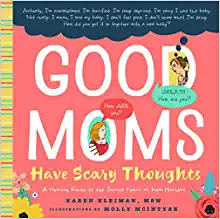
Good Moms Have Scary Thoughts by Karen Kleiman
Over 90 percent of new mothers will have scary, intrusive thoughts about their baby and themselves. What if I drop him? What if I snap and hurt my baby? Mothering is so hard. I don't know if I really want to do this anymore. Gosh, I'm so terrible for thinking that! Yet, for too many mothers, those thoughts remain secret, hidden away in shame that makes them feel even worse. But here's the good news: You CAN feel better!
Author Karen Kleiman, co-author of the seminal book This Isn't What I Expected and founder of the acclaimed Postpartum Stress Center, comes to the aid of new mothers everywhere with a groundbreaking new source of hope, compassion, and expert help.
Good Mothers Have Scary Thoughts is packed with world-class guidance, simple exercises, and nearly 50 stigma-busting cartoons from the viral #speakthesecret campaign that helps new moms validate their feelings, share their fears, and start feeling better. Lighthearted yet serious, warm yet not sugary, and perfectly portioned for busy moms with full plates, Good Moms Have Scary Thoughts is the go-to resource for moms, partners, and families everywhere who need help with this difficult period.
2. Toward a New Psychology of Women

Toward a New Psychology of Women by Jean Baker Miller
In the years since its original publication, this best-selling classic became famous for its groundbreaking demonstration of how sexual stereotypes restrict our psychological development. Toward a New Psychology of Women revolutionized the concepts of strength and weakness, dependency and autonomy, emotion, success, and power, selling more than 200,000 copies and changing the lives of women across the globe.
In this updated second edition, Dr. Jean Baker Miller reflects on where women are today, addressing both the enormous progress in some areas and the challenges still to be met. Celebrating the questions that have been raised and the actions women have taken, as well as looking toward future change, Miller affirms the strength and diversity of womanhood.
3. Goddesses in Everywoman

Goddesses in Everywoman by Jean Shinoda Bolen
A classic work of female psychology that uses seven archetypal goddesses as a way of describing behavior patterns and personality traits is being introduced to the next generation of readers with a new introduction by the author.
Psychoanalyst Jean Bolen's career soared in the early 1980s when Goddesses in Everywoman was published. Thousands of women readers became fascinated with identifying their own inner goddesses and using these archetypes to guide themselves to greater self–esteem, creativity, and happiness.
Bolen's radical idea was that just as women used to be unconscious of the powerful effects that cultural stereotypes had on them, they were also unconscious of powerful archetypal forces within them that influence what they do and how they feel, and which account for major differences among them.
Bolen believes that an understanding of these inner patterns and their interrelationships offers reassuring, true–to–life alternatives that take women far beyond such restrictive dichotomies as masculine/feminine, mother/lover, and careerist/housewife. She demonstrates in this book how understanding them can provide the key to self–knowledge and wholeness.
Dr. Bolen introduced these patterns in the guise of seven archetypal goddesses, or personality types, with whom all women could identify, from the autonomous Artemis and the cool Athena to the nurturing Demeter and the creative Aphrodite, and explains how to decide which to cultivate and which to overcome, and how to tap the power of these enduring archetypes to become a better "heroine" in one's own life story.
4. Becoming by Michelle Obama
- Michelle Obama's memoir, "Becoming," tells her life story, which is motivating. It shows how she faced challenges and became successful.
- The book talks about how important education is, especially for girls. Sadly, some girls can't go to school because they're girls or because their families are poor.
- Michelle Obama's book shows how being educated is crucial in today's world. It's about learning and growing, which is super important.
- Michelle Obama managed to be a daughter, wife, mother, and even the First Lady of the United States. She showed that you can be great at different roles without sacrificing one for the other.
- The book teaches that you don't have to choose between being a good mom, wife, or leader. You can be all of them if you work hard. And if someone says you can't, you can prove them wrong.
5. #MeToo in the Corporate World by Sylvia Ann Hewlett
- The book shares new information about how often different groups experience harassment and assault at work.
- It explains how sexual misconduct scandals can cost companies a lot of money and hurt their reputation.
- The author talks about how male leaders are now afraid to help young women in their careers, which hurts workplace diversity.
- The book suggests practical solutions, like legal actions and company policies, to make workplaces safer.
- Real-life examples from companies like IBM show how these solutions can work in real life.
6. The Body Is Not an Apology by Sonya Renee Taylor
- This book teaches you how to love and accept yourself just the way you are.
- It helps you understand and fight against the negative feelings you have about your body.
- Sonya Renee Taylor, a famous activist and poet, guides us on this journey.
- By reading this book, you can inspire others to also love themselves and fight against body shaming.
- The book explains how society's systems hurt our self-esteem and how we can fight back.
- It shows how self-love can lead to a fairer and more caring world for everyone.
7. The Midnight Library: A Novel

The Midnight Library: A Novel by Matt Haig
- The Midnight Library by Matt Haig tells the story of Nora, who is unhappy and tries to end her life. She then finds herself in a magical library where it's always midnight.
- In the library, there are books about all the different choices Nora could have made in her life. Each book shows how her life would be if she had made different decisions.
- The book's concept is unique and interesting, making you think about the choices you make in your own life.
- The writing is simple and easy to understand, which makes it a good read for young people.
- The story is very inspiring and motivating, offering new perspectives on life's challenges and how to overcome them.
8. We Should All Be Feminists by Chimamanda Ngozi Adichie

What does "feminism" mean today? That is the question at the heart of We Should All Be Feminists, a personal, eloquently argued essay adapted from her much-viewed TEDx talk of the same name by Chimamanda Ngozi Adichie, the award-winning author of Americanah and Half of a Yellow Sun. With humor and levity, here,
Adichie offers readers a unique definition of feminism for the twenty-first century, one rooted in inclusion and awareness. She shines a light not only on blatant discrimination but also on the more insidious, institutional behaviors that marginalize women around the world, to help readers of all walks of life better understand the often-masked realities of sexual politics.
Throughout, she draws extensively on her own experiences in the US, in her native Nigeria, and abroad, offering an artfully nuanced explanation of why the gender divide is harmful to women and men alike. Argued in the same observant, witty, and clever prose that has made Adichie a bestselling novelist, here is one remarkable author's exploration of what it means to be a woman today and an of-the-moment rallying cry for why we should all be feminists.
9. Lean In by Sheryl Sandberg

Sheryl Sandberg--Facebook COO, ranked eighth on Fortune's list of the 50 Most Powerful Women in Business--has become one of America's most galvanizing leaders and an icon for millions of women juggling work and family. In Lean In, she urges women to take risks and seek new challenges, to find work that they love, and to remain passionately engaged with it at the highest levels throughout their lives.
Lean In --Sheryl Sandberg's provocative, inspiring book about women and power--grew out of an electrifying TED talk Sandberg gave in 2010, in which she expressed her concern that progress for women in achieving major leadership positions had stalled. The talk became a phenomenon and has since been viewed nearly two million times.
In Lean In, she fuses humorous personal anecdotes, singular lessons on confidence and leadership, and practical advice for women based on research, data, her own experiences, and the experiences of other women of all ages.
Sandberg has an uncanny gift for cutting through layers of ambiguity that surround working women, and in Lean In, she grapples, piercingly, with the great questions of modern life. Her message to women is overwhelmingly positive. She is a trailblazing model for the ideas she so passionately espouses, and she's on the pulse of a topic that has never been more relevant.
10. Mistakes I Made at Work by Jessica Bacal

In Mistakes I Made at Work, a Publishers Weekly Top 10 Business Book for Spring 2014, Jessica Bacal interviews twenty-five successful women about their toughest on-the-job moments.
These innovators across a variety of fields - from the arts to finance to tech - reveal that they're more thoughtful, purposeful, and assertive as leaders because they learned from their mistakes, not because they never made any. Interviewees include:
- Cheryl Strayed, bestselling author of Wild
- Anna Holmes, founding editor of Jezebel.com
- Kim Gordon, a founding member of the band Sonic Youth
- Joanna Barsch, Director Emeritus of McKinsey & Company
- Carol Dweck, Stanford psychology professor
- Ruth Ozeki, New York Times bestselling author of Tale for the Time Being
And many more...
Ideal for millennials just starting their careers, for women seeking to advance at work, or for anyone grappling with issues of perfectionism, Mistakes I Made at Work features fascinating and surprising anecdotes, as well as tips for readers.
Midlife Reckoning: Authenticity, Loss & Second Chapters (Ages 40–49)
Authenticity, perimenopause psychology, empty nest, marriage reevaluation, second chapters
Everything you suppressed in your 30s surfaces now. These books walk you through perimenopause, marriage shifts, and the courage to start over.
- Women Who Run With the Wolves — Clarissa Pinkola Estés
- The Psychology of Women and Gender — Nicole Else-Quest & Janet Hyde
- An American Marriage — Tayari Jones
- Oona Out of Order — Margarita Montimore
- The Women's Room — Marilyn French
- More Than a Woman — Caitlin Moran
- Why We Can't Sleep — Ada Calhoun
- Everything I Never Told You — Celeste Ng
- Beloved — Toni Morrison
- Americanah — Chimamanda Ngozi Adichie
1. Women Who Run With the Wolves

Women Who Run With the Wolves: Myths and Stories of the Wild Woman Archetype by Clarissa Pinkola Estés
This book is written by an American. Basically, each chapter starts with an archetypal myth and then analyzes the meaning of the myth, mainly about how we women regain our wildness after the repression of social civilization.
Every woman has such a myth: How should we control the wildness in our hearts, how to break free from the cage of repression, and how to be our true selves? How do we deal with those primal instincts related to love, sex, secrets, bodies, seduction, challenge, etc.? Women have long been taught to be nice to others and to be gentle. How should we balance that?
Now, when I meet women who don't believe in intuition, don't believe in their own potential, and indulge themselves, I want to say: go watch The Woman Who Runs with the Wolf! Maybe this book is not that easy to read, but it is very worthwhile. Because it will be a powerful force in a woman's heart - firm and strong - a "wild woman".
Yes, women are wolves, sharp and witty, tenacious and stamina, loyal and passionate. The wolf running wild in the wilderness stood up, and the wise woman stepped forward firmly, that is the soul of the wild. She lurks in every woman's body, condensing into a powerful force, resisting attack, resisting temptation, finding belonging, and igniting creativity.
Our souls have been away from home for too long, and she has used ancient knowledge to call back the wild instincts that wandered away. No matter how long the process is or how hard the journey is, home is her final destination. The warmest, most beautiful, most innocent parts of human nature are still there, and we meet them from time to time.
2. The Psychology of Women and Gender

The Psychology of Women and Gender by Nicole M. Else-Quest
With clear, comprehensive, and cutting-edge coverage, The Psychology of Women and Gender: Half the Human Experience + delivers an authoritative analysis of classical and up-to-the-minute research from a feminist, psychological viewpoint. Authors Nicole M. Else-Quest and Janet Shibley Hyde examine the cultural and biological similarities and differences between genders, noting how they are often a result of inequality.
The Ninth Edition emphasizes rigorous methodology and reviewing and evaluating empirical evidence, helping demystify the scientific process in this field of study. Hands-on applications through case studies that integrate research from other disciplines give students further experience with key issues.
This proven resource equips readers with a strong foundation for understanding the dynamic influences of gender, sexual orientation, and ethnicity in the context of psychology and society, along with strategies for thinking critically about popular culture and using psychological science to improve people's lives and promote gender equality.
3. An American Marriage by Tayari Jones
- The book American tells a story about a man named Roy who goes to Atlanta to find his wife, Celestial, after being released from prison.
- It's about marriage, which is like a big headline in life. It looks at how marriage works across different places and times in history.
- Roy, the husband, gets a long prison sentence, which makes things hard. Should his wife, Celestial, wait for him or move on with someone else?
- The book conveys strong emotions, such as longing and sadness, as Roy and Celestial deal with being apart. It's not just about marriage but also about friendship.
- Some parts of the story happen in prison, showing what life is like there. There's also a scene where they buy weird things, which adds to the story's intrigue.
4. Oona Out of Order: A Novel

Oona Out of Order: A Novel by Margarita Montimore
- The book is about a girl who can time-travel, but not with her body, only with her mind.
- She jumps to different times in her own life at midnight every year.
- The story could be deeper, but it's still enjoyable.
- It shows that your mind can grow even if your body doesn't.
- Even though it's not perfect, it's still a fun and interesting book to read.
5. The Women's Room by Marilyn French
In fact, I finished reading it years ago and gave myself time to digest it. After reading the preface carefully. What should I say? It's limited to "daily life". This book's definition of women's roles in society and their personal pursuits is not deep enough, and the whole is not macroscopic, but take a step back and think about it.
Although you need not just shelter, a daring mind to break through, and a brave heart to live in it, I still feel the same as when I first read it. A bit biased, but credit to the author for sharing the stories.
The book I have been reading for several months covers Mira's life from childhood to forty years old, and the fate of women in the group before and after the divorce. The first half describes Mira's life as a housewife and other housewives in the same community, which is a bit trivial to read. In the second half, Mira divorces and goes to Harvard, and the women she meets can give each other encouragement and warmth despite their own difficulties.
Entering a new community to establish connections, gradually getting acquainted with a stable connection, and then the inevitable falling apart seems to be an endless cycle. The same is true of the fate of women. From being imprisoned in the family to seemingly being able to make choices, the background is always bleak. The meticulous psychological portrayal of different characters in the book can resonate very much.
6. More Than a Woman by Caitlin Moran
A decade ago, Caitlin Moran burst onto the scene with her instant bestseller, How to Be a Woman, a hilarious and resonant take on feminism, the patriarchy, and all things womanhood. Moran's seminal book followed her from her terrible 13th birthday through adolescence, the workplace, strip clubs, love, and beyond, and is considered the inaugural work of the irreverent confessional feminist memoir genre that continues to occupy a major place in the cultural landscape.
Since that publication, it's been a glorious ten years for young women: Barack Obama loves Fleabag, and Dior makes "FEMINIST" t-shirts. However, middle-aged women still have some nagging, unanswered questions:
- Can feminists have Botox?
- Why isn't there such a thing as "Mum Bod"?
- Why do hangovers suddenly hurt so much?
- Is the camel toe the new erogenous zone?
- Why do all your clothes suddenly hate you?
- Has feminism gone too far?
- Will your To-Do List ever end? And
- WHO'S LOOKING AFTER THE CHILDREN?
As timely as it is hysterically funny, this memoir/manifesto will have readers laughing out loud, blinking back tears, and redefining their views on feminism and the patriarchy. More Than a Woman is a brutally honest, scathingly funny, and absolutely necessary take on the life of the modern woman, and one that only Caitlin Moran can provide.
7. Why We Can't Sleep by Ada Calhoun
It's such a good topic, such a good entry point, as a middle-aged woman who also wakes up late at night to seize "her own time"; it can't be more empathetic. To be honest, I was rather disappointed to read it.
The book for women interviews ten women and discusses topics such as "occupational crisis", "the role of caring for the family", "divorce", "menopause", "reproductive choices", and "peer pressure", but the effect on paper is embarrassing, such as "the interview leads to Topic” + the combination of the topic’s summary loses the strength of the interview itself and the clear advantages of the summary.
The discussion focuses more on the gains and losses brought about by Gen X, that is, the social environment faced by white middle-class women in the 65-80 generation, and involves far more intergenerational comparisons than gender discussions.
Every Gen X woman should read this book. If you can't find yourself in every chapter, then in most chapters, I bet you can feel that you are writing about yourself. Especially in the chapter before menopause, I feel that every sentence hits the heart.
8. Everything I Never Told You by Celeste Ng

"Everything I Never Told You" is a gripping and heartbreaking debut novel by Celeste Ng. Set in 1970s small-town Ohio, it follows the Lee family, a Chinese American family, as they face the tragedy of their favorite child, Lydia, being found dead in a local lake.
The novel explores the secrets and tensions within the family, as well as the pressures and expectations placed on Lydia by her parents. James, consumed by guilt, embarks on a self-destructive path, while Marilyn is determined to find someone to blame. The youngest daughter, Hannah, may hold the key to the truth.
The story delves into the complexities of family, culture, and the struggle for understanding. Ng's writing is beautifully crafted, and the characters are deeply developed. The book is a poignant portrayal of the consequences of parental expectations and the search for connection within a family. Overall, "Everything I Never Told You" is a powerful and unforgettable read.
9. Beloved by Toni Morrison

Whether love or not love, weak love is not love at all! The words behind the book shocked me a lot at first. What kind of extreme and strong love is this? The loved one must be very happy. . .
I read it slowly, but I don't quite agree with it. This kind of love is too controlling and oppressive, and the loved one must be very painful. If it weren't for such a strong love, would Beloved go away with more peace of mind? Her will the soul find a better home than a tangled rebirth tragedy.
Every day before taking a nap, I leaned on the bed, turned a few pages, and slowly finished reading. Of course, the quality of my naps has also improved a lot. I was a little impatient when I saw the second half, chattering endlessly; maybe I read too many tear-jerking stories.
I once discussed this book with my classmates, and I firmly said that if I were her, I would definitely kill myself. The classmate smiled and said nothing, perhaps thinking that I was a little ridiculous. Later, I also felt a little sad, killed myself, and then. . .
Some children are waiting to be fed, a husband who has no news, and an elderly mother-in-law, which is too embarrassing. Suddenly, the idea that you shouldn't have children, you shouldn't get married, you shouldn't fall in love, you shouldn't, you shouldn't. . .
But it was too extreme, and she suddenly became the brown-skinned girl in Morrison's "The Bluest Eye", a well-behaved girl all her life, without love or desire. . .
10. Americanah by Chimamanda Ngozi Adichie
This book is roughly divided into four stages.
- The first stage is when Ifemelu is in high school,
- The second stage is when she first arrived in the United States,
- The third stage is when she gradually settled down in American society, and
- The last stage is when she chose to return to Nigeria.
Objectively speaking, each stage has its own characteristics, but subjectively speaking, my personal favorite is the second stage, that is, she came to the United States alone, from the yearning for infinite possibilities at the beginning to deep depression. Struggling in reality, she finally compromised in an instant. I think that day should stay with her forever, the strange tennis coach and the self-loathing that made her sick. But at that moment, she did compromise, just like thousands of desperate people in real life.
One of the things I really like about this stage of the story is that it's so authentic. Unlike her in Stage 3, she's more of an adolescent rebel, with a sharp attitude, looking for all the contradictions in her life. She looks for contradictions in white people, in her African-American boyfriends, and in immigrants who have not escaped their Nigerian background.
These contradictions may be true or false, but from a certain point of view, I think it is also a kind of prejudice from her own, a level of thought that can never transcend race. It was more like she was constantly reminded of her ethnicity than the white guy, his boyfriend, or the Nigerian immigrant at the hair salon.
Regardless, the book's angles are interesting and engaging, especially for someone with a similar experience to mine. Ifemelu, in the book, has a slightly embarrassing identity. Using a word I summed up, it can be called a 1.5-generation immigrant. This generation lives between the mainstream society and the immigrant generation.
They may have grown up in a foreign country, or they immigrated abroad with their parents when they were around ten years old, but most of them have a very traditional family background and have experienced traditional family education. Such a growth process prevents them from fully integrating into the mainstream local population, and they also cannot get along well with the so-called overseas students and first-generation immigrants.
They enjoy this unique advantage - they can speak two or more languages and have a good understanding of two cultures. At the same time, they also have to bear the burden brought about by these advantages. Parents have higher than average expectations and requirements for them, as well as suppression from traditional culture.
In such an embarrassing position where I can advance or retreat but cannot really belong to a group, the 1.5th-generation immigrants have formed their own group. However, being in this awkward group, I sometimes have a hard time regarding myself and the future position of this group in society. It can also be unpredictable.
So when faced with some of Ifemelu's thoughts in the book, I can also smile with deep understanding, which may be the main reason why this book moved me.
The Wisdom Years: Resilience, Legacy & Radical Self-Acceptance (Ages 50–65)
Legacy, elder care, retirement identity, aging body, grief, radical acceptance
You've earned the right to stop performing. These books help you face aging, grief, and the freedom of becoming fully yourself.
- Man and His Symbols — Carl Jung
- The Body Keeps the Score — Bessel van der Kolk
- An Elderly Lady Is Up to No Good — Helene Tursten
- The Sense of an Ending — Julian Barnes
- Tuesdays with Morrie — Mitch Albom
- The Summer Book — Tove Jansson
- I Feel Bad About My Neck — Nora Ephron
- Bossypants — Tina Fey
- Wild — Cheryl Strayed
- Just Kids — Patti Smith
1. Man and His Symbols

Man and His Symbols by C.G. Jung
What a beautiful and powerful transformation in life. Everything happened so naturally and mysteriously. Before reading this book, I read a pamphlet on Jung's psychology, and I couldn't have expected to have such a huge interest in Jung after reading that pamphlet. And it all happened so accidentally and inadvertently. Even the person who sent me this booklet doesn't know Jungian psychology.
Jung's general line of thought is to reflect on the rational thought trend in the West (the rational thought after the Renaissance can even be traced back to the rational source of the ancient Greek and Roman times). His reflection may be an inevitable turning point in the Western trend of thought, and it is also the result of the fusion of Eastern and Western thoughts.
The specific history of thought is none of my business. What I want to say is that for Chinese or Eastern peoples, it should be noted that Jung's anti-rationality is based on rationality. A more precise expression might be to return to the core or even the unconscious of the cultural canon and bring it into modern reason to offer a possible solution to the modern crisis. So, his return is conservative and safe.
Thinking about my life now, a dark line is becoming clearer and clearer, from the interest in the ancient classics to the exploration and admiration of Western rationality (had to leave the classics, but in fact never left), and also with myself related to the exhaustion, and then to personally reflect and examine the core of the classics and spirituality.
All this is not the result of reading a few books. A better expression is that one's own awareness was manifested and strengthened during the encounter with Jung. What will happen after that? We can only sing as we walk.
2. The Body Keeps the Score

The Body Keeps the Score: Brain, Mind, and Body in the Healing of Trauma by Bessel van der Kolk, M.D.
After reading this thick book off and on, I once saw half of it and didn't know what the theme of the book was. Maybe it's because I read too many reference books or specific theory books before, and I didn't use a good way to open it at the beginning. In fact, this can be regarded as a medical history of trauma treatment or a diary.
As a physician with 30 to 40 years of medical experience and mainly trauma treatment experience, the author will show you his life experience, which can be said to be an era in which trauma treatment developed most rapidly and flourished.
From a top-down language approach to being one of the first psychiatrists to start using drugs. These seem to have become common sense in this society, and even Prozac has been known to passers-by, but it seems that this history is not too far away. And it seems that, according to the author's evaluation, although this era has been brilliant, it has quickly faded away.
At the same time, PTSD (post-traumatic stress disorder), as a very fashionable word, frequently appears in the public eye. The author spends a lot of space analyzing PTSD from many cases, and even in essence. I understand that the core is still intrusive memory, and the body never forgets these memories, so that part of the brain function of the injured person shuts down the function in a self-protective manner. It's like the 4F pattern of the general human response to trauma (Fight, Flight, Freeze, Fold).
From the perspective of the physiological response of the brain, we can also understand that psychotropic drugs are accepted by the public as purely biological treatment methods. In fact, different treatment options have their pros and cons. You can't say that there is a panacea, but they are all awakening the body from memory from different angles and forms. Even if there is a theory or tool that promotes a cure for all diseases or that it is self-reliant, I will generally resist or even block it directly. It can be said that anything absolutely strong is an exaggeration.
Back to the content of the book: According to the author, outdated psychotropic treatment and even top-down language are only temporary solutions. However, the most important core of the book is several contemporary technologies. I admire and appreciate the author's inclusiveness. I have learned to use all the tools and even shared them in detail in the book. I have introduced each case in detail. It is helpful for all people involved with trauma, whether you are an experiencer, counselor, doctor, or even family and friends.
Whether it is a record or an index, I have sorted them out and listed them one by one: Limbic System Therapy, Body Experience Therapy SE, Hypnosis, Cognitive Behavioral CBT, Systemic Desensitization, MDMA, Eye Movement Desensitization Reprocessing EMDR, Yoga, Family Sorting IFS, Alpha-Theta Training, Drama treatment, etc.
All of the above-mentioned therapeutic tools or methods are worth writing a book about or learning and practicing. Of course, I was taken aback when I first saw MDMA, which is commonly known as ecstasy. In fact, all these treatments are not just about the form and tools themselves, but more about the treatment ideas and logic.
All of this research and effort is really working towards the goal of getting those who have been traumatized out of their trauma. "One of the important criteria of mental health is being able to feel safe in interpersonal relationships; Building secure connections with others is an important foundation for a meaningful and fulfilling life." Keep everyone healthy.
Finally, we should also emphasize an important point throughout the book: no matter what kind of treatment we do, we must think clearly about what kind of problem we are trying to solve and how it came about before everything starts. Although everyone understands this principle, it seems that in many behaviors, it is too superficial.
3. An Elderly Lady Is Up to No Good by Helene Tursten
Just finished reading the first story, and the feeling is that the quiet old lady meets an annoying neighbor. Finally decided to drop by, eh? How did you kill him!? Why does the old lady seem to do it on purpose?
An 89-year-old granny who lived alone easily killed three people in succession and escaped legal sanctions. A novel that can be read in one sitting in two days. An 89-year-old lady, by herself, killed 3 people in a row easily. How sad, cold, and bold.
It's so interesting. Don't mess with the old lady; otherwise, she will kill you and then get away with it. Isn't the old lady's physicality too awesome? I was really shocked by the last story, and it's okay to get away with it. Pretending to be old and confused and weak and hard of hearing, she has no worries about food and clothing, is healthy, and can often travel alone in his later years. The single life is so ideal. I envy him all the way.
4. The Sense of an Ending by Julian Barnes
History is that certainty produced at the point where the imperfections of memory meet the inadequacies of documentation. A smart and brilliant statement. A historian of early Christianity quoted the line in her lecture--this inspired me to read the book. up memories about the enigmatic life. A well-written novel.
Memory is like the black box of an airplane. The memory will be cleared automatically after a safe and sound flight, and what can be seen is often the problematic part. This is a book about memories. The first part can be called fluent; a person's life flows into the tip of the pen through his own dictation. What kind of person is this? A calm life, still a sincere reflection, in general, this is an above-average person, not annoying, not interesting, and occasionally likable.
Then comes the second part, where the mystery arises. Is everything we remember really what we think it is? Are those who have hurt us and fought against us really so hateful? I thought I knew how to think, and I thought I was not a mediocre person, but in fact, it is just that I live such a mediocre life.
When Tony started to face his life again, he must have been moved and wept bitterly. God, I am so sincerely introspective, I am so willing to understand others. The ending is a resounding slap in everyone's face. As for whether they will wake up, I am pessimistic.
5. Tuesdays with Morrie

Tuesdays with Morrie: An Old Man, a Young Man, and Life's Greatest Lesson, 20th Anniversary Edition by Mitch Albom
- 'Tuesdays with More' is a book about an old and sick teacher and his student.
- The student has lost touch with life, but meeting the teacher helps him find meaning again.
- They meet every Tuesday and have deep conversations.
- Reading this book can change how you see life, especially if you feel misunderstood or lost.
- It's like The Ultimate Gift but with its own unique twist, so if you liked that book, you'll probably enjoy this one too.
6. The Summer Book by Tove Jansson

When I finished reading it, a hint of coolness suddenly came, and the summer in Hong Kong began to fade... Tove Jansson's little books for women completely captured me; every day on the island is magnificent!
7. I Feel Bad About My Neck by Nora Ephron

Summary: With her disarming, intimate, completely accessible voice and dry sense of humor, Nora Ephron shares with us her ups and downs in I Feel Bad About My Neck, a candid, hilarious look at women who are getting older and dealing with the tribulations of maintenance, menopause, empty nests, and life itself.
The woman who brought us When Harry Met Sally..., Sleepless in Seattle, You've Got Mail, and Bewitched, and the author of best sellers Heartburn, Scribble Scribble, and Crazy Salad, discusses everything from how much she hates her purse to how much time she spends attempting to stop the clock: the hair dye, the treadmill, the lotions and creams that promise to slow the aging process but never do. Oh, and she can't stand the way her neck looks. But her dermatologist tells her there's no quick fix for that.
Ephron chronicles her life as an obsessed cook, passionate city dweller, and hapless parent. She recounts her anything-but-glamorous days as a White House intern during the JFK years (“I am probably the only young woman who ever worked in the Kennedy White House that the President did not make a pass at”) and shares how she fell in and out of love with Bill Clinton from a distance, of course. But mostly, she speaks frankly and uproariously about life as a woman of a certain age.
Utterly courageous, wickedly funny, and unexpectedly moving in its truth-telling, I Feel Bad About My Neck is a book of wisdom, advice, and laugh-out-loud moments, a scrumptious, irresistible treat.
8. Bossypants by Tina Fey

Summary: Once in a generation, a woman comes along who changes everything. Tina Fey is not that woman, but she met that woman once and acted weird around her. Before 30 Rock, Mean Girls, and Sarah Palin, Tina Fey was just a young girl with a dream: a recurring stress dream that she was being chased through a local airport by her middle-school gym teacher. She also had a dream that one day she would be a comedian on TV. She has seen both these dreams come true.
At last, Tina Fey's story can be told. From her youthful days as a vicious nerd to her tour of duty on Saturday Night Live, from her passionately halfhearted pursuit of physical beauty to her life as a mother eating things off the floor; from her one-sided college romance to her nearly fatal honeymoon - from the beginning of this paragraph to this final sentence. Tina Fey reveals all and proves what we've all suspected: you're no one until someone calls you bossy.
9. Wild
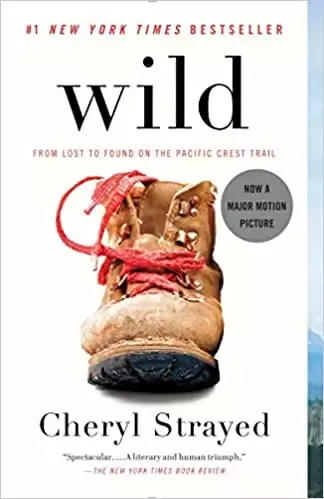
Wild: From Lost to Found on the Pacific Crest Trail by Cheryl Strayed
In the beginning, Cheryl wrote about an important decision she faced in the wilderness: one of her hiking shoes rolled down into the valley while the other was held tightly in her arms. What use is the only shoe left for her? Now that life is so bad, what else is terrible?
So, she firmly threw the other hiking shoe far into the valley. How did she complete the wilderness exploration that followed? What made her, an outdoor rookie, walk on this wilderness road of no return? A book that I can't put down after reading the beginning!
After many years of looking at the Douban page of this book, I found that there are still so many readers who are touched by this book to speak here. I am very touched! Why not weep several times for this book?
I remember that when the author was looking at the white fox on the mountain and then couldn't help calling out "mother", although I was in a noisy cafe, I suddenly felt silent everywhere, and tears flowed down unknowingly. I feel that I have caught a glimpse of what people call "great beauty", and I have touched something sacred. The Tao is unclear, unclear, but the touch is real.
10. Just Kids

Just Kids by Patti Smith
I just finished reading "Just Kids" by Patti Smith, and unlike the first day I read the book, I sat alone in the library with no one, turned to the first page, and saw Robert dead." At that moment, Tosca started that wonderful aria "For Art, For Love." I wept silently, closed the page, waited for the tears to finish, opened it again, and read half of the book.
At this moment, after a month, I read the remaining half of the book with astonishing slowness, just like the Bible, without crying, only a kind of extreme depression and calm intertwined to make me continue to expand, close to Choking, you must write to save yourself. I think it's like God's mission. Whenever I can't cry, I know that real despair and hope are coming.
The book is about the love and friendship of Patti Smith and photographer Robert Mapplethorpe, about their ups and downs, mutual support, and self-discovery. The words in the book are Patti's promise to Robert, who died twenty years ago, that she would record this story about them. It was a gift she gave to Robert. Later, unconsciously, it became a gift she gave to us readers.
My eyes watered several times while reading this book. It is such a beautiful story of passion, love, and, most importantly, unbreakable companionship. I guess I'm more jealous than being touched by their legend. With a person like Robert Mapplethorpe in Patti's heart, along with their history and affection, she will never feel lonely, not even with the fact that he passed away ahead of her.
I love reading about the scenes in which they worked together and inspired each other. He would wait anxiously for her to come back home and see his work. "Patti Patti Patti." In the pictures in my head, his face looked just like an adorable baby doll.
I love her using the word "learn" when talking about creating art that was inspired by him, as if I could see them growing up together. And I love the fact that they understood each other so well that the unusual events could turn out to be so natural and meaningful to their companionship, which only brought them closer.
Beyond Age: Trauma, Neurodivergence & Deep Psychological Work
Clinical depth transcends life stage
Some wounds don't follow a timeline. These books are for readers of any age, ready to do the deepest work on trauma, diagnosis, and healing what broke first.
- The Neurotic Personality of Our Time — Karen Horney
- The Second Sex — Simone de Beauvoir
- To Kill a Mockingbird — Harper Lee
- The Unbearable Lightness of Being — Milan Kundera
- A Clockwork Orange — Anthony Burgess
- Wuthering Heights — Emily Brontë
- The Girl on the Train — Paula Hawkins
- Educated — Tara Westover
- Bad Feminist — Roxane Gay
- The Liars' Club — Mary Karr
1. The Neurotic Personality of Our Time

The Neurotic Personality of Our Time by Karen Horney
Karen Horney is an authority figure in Western psychology with many followers. She is the main representative of the contemporary new psychoanalytic school in the West, the main representative of Neo-Freudism, and one of the earliest advocates of social psychology.
"The Neurotic Personality of Our Time" is Horney's masterpiece. The author believes that each of us is constantly in various contradictions and conflicts in our hearts, and the most important conflict is that we all have the urge to "get close to others", "against others", and "escape from others" at the same time. If these impulses are not well-coordinated, it will cause us to fall into all kinds of anxiety and neurosis.
2. Second Sex by Simone De Beauvoir

Recommended reason: People closed the woman in the kitchen or in the boudoir, but they were surprised at her limited vision; people broke her wings, but lamented that she could not fly. I hope people will open up to her, and she will never be forced to stay in the present.
Summary: She attaches importance to stockings or nylon stockings and attaches importance to gloves and hats. It is by no means useless, but she must ensure her own status. The more common this situation is, the more attentive a well-dressed woman will be; the more she finds a job, the greater the benefits that beauty brings to her. Author Simone de Beauvoir's book is hailed as "the soundest, most sensible, and most intelligent book to discuss women in history" and is even revered as a Western woman's "Bible".
With cultural content covering philosophy, history, literature, biology, ancient mythology, and customs as the background, she discussed the actual situation, status, and rights of women in the historical evolution from primitive society to modern society, and discussed women's Gender differences revealed by individual development history. "Second Sex" can be regarded as an encyclopedia of the entire world of women. She opened the prelude of the women's cultural movement to the long-standing gender discrimination.
3. To Kill a Mockingbird by Harper Lee

Recommended reason: If I have children in the future, I will show them this book. I want him to know that no matter how the world changes, integrity, honesty, and kindness are the most precious qualities of a person. No sense of humor may make him too likable, but having these three qualities is enough to make him have no regrets in his life. In the same way, they don't need to be sleek; they only need to be respectful, and then society will give them a pass.
Summary: Bravery is when you know you will lose before you start, but you still have to do it, and you have to stick to it anyway. You rarely win, but sometimes you do. To Kill a Mockingbird is a novel published in 1960 by American female writer Harper Lee.
The theme of the story involves serious issues such as racial inequality and rape, and its style is still warm and interesting. The novel is written in the first person. The narrator's father, Atticus Finch, plays a morally upright role in the book and is also a model of an upright lawyer.
4. The Unbearable Lightness of Being: A Novel

The Unbearable Lightness of Being: A Novel by Milan Kundera
People often lament the heaviness of life, and there is always a feeling of being overwhelmed by life. Why do you feel heaviness? Is it because we believe that life can be reincarnated forever? I believe that today's choices or what you're doing now will have a profound impact and inevitable connection in the future or in the future or even in the next life.
Therefore, when you face immediate things and make choices, you will be worried about your gains and losses. This makes every choice heavy so that life becomes heavy. Do you really think this is the reason? In fact, there is no eternal reincarnation in the world; there is only one life, and from the beginning, it runs toward the end without looking back.
Einmal ist Reinmal only once is equal to none, and only live once equals no life. A person's life is a draft that can never be formal work, a dress rehearsal that can never be officially staged. Life belongs to us only once. In the end, we cannot test which way of life is better through comparison. Correct, so we don't need to regard every choice as so important and so heavy. We can be mundane people and enjoy the ease of life as we please.
However, can it really be this way? Maybe some people can really do it, but there will still be some people who can't bear the lightness of life, more than the weight of life, just like Dr. Thomas and his lover Sabina in the article. In the body, the spirit and the flesh are separated, and the lightness that the flesh can enjoy makes the soul feel inexplicably heavy. Love, compassion, ideals, responsibilities, ambitions, etc., these ingredients satisfy the spirit and comfort the soul, but make life heavy, and cares, worries, etc. follow.
After all, life belongs to us only once. Today's things will no longer exist tomorrow. We don't have to take it seriously. However, because of this, only time, we have to be careful of every step we take, because if we go wrong, we don't have to take it seriously.
Can't look back. The contradictory life, the contradiction of life, often puts us at a loss as to what life is, and it is precisely because of this loss that we endure more painful suffering than heavy. In the end, I have to say that a life that is not worth taking seriously is more unbearable than a life of heavy responsibility and full of painful choices.
5. A Clockwork Orange

A Clockwork Orange by Anthony Burgess
Youth must pass away, yes. It is nothing but an interpretation of animal habits. No, it's not so much an animal habit, but rather a small toy sold on the street. It's a tin doll with a clockwork inside and a knob on the outside.
When you tighten it, the doll starts walking. A Clockwork Orange is a fantasy novel. A troubled teenager living in the future society of the United Kingdom, due to adolescent agitation and embarking on the road of crime, was later punished by society and deprived of his free will. After thinking and transforming, he reintegrated into society and realized that he was just a clockwork orange in the hands of God...
A Clockwork Orange's portrayal of lost youth is of epoch-making significance in the history of literature. Although director Kubrick's adaptation of the film of the same name has been banned for decades, it has long been regarded as a classic of youth films all over the world.
6. Wuthering Heights -by Emily Brontë

Wuthering Heights by Emily Brontë
When referring to Emily Brontë's "Wuthering Heights", Woolf said that the impulse that prompted Emily Brontë to create was not her own pain and injury. After reading "Wuthering Heights", I can't believe it. She said so. The kind of heart-wrenching passion in the novel is almost impossible to achieve by one's imagination without personal experience.
A well-meaning gentleman leads back from the street a dark child who grows up in love with the daughter of this gentleman, while his son abuses him in every possible way. Because he felt the low status of the outsider, the person he loved married someone else, and wanted to give him a chance to change his fate, but this hurt the outsider's self-esteem even more.
He mysteriously disappeared before his lover married someone else, and a few years later, he made a fortune and launched frantic revenge, he not only got the property of those who had hurt him, but also watched them die one by one, And continued his revenge on their next generation, fate finally mocked him, his son was a helpless douchebag, crying all day, sick, dying early, and his enemy's The child is just a replica of his youth.
The person he loves and the daughter born by others become her daughter-in-law and later becomes a dead wife. He cannot prevent a new love from happening, and finally dies in desolation. That's the story Emily Brontë tells us in her "Wuthering Heights."
When comparing "Jane Eyre" and "Wuthering Heights", Woolf said that "Jane Eyre" wanted to say "I love, I hate, I suffer", while "Wuthering Heights" went beyond itself and wanted to say " we, the whole of humanity" and "you, the external forces". I can't see any difference in the expression of love between the two books.
If there is any difference, then "Wuthering Heights" expresses "I love more, I hate more, I suffer more." This kind of love, hate, and pain has reached its limit and brings nothing but madness and destruction. For two people who are madly in love, "we, the entire human race," and "you, the outer world" are nothing; they are each other's entire universe.
"If everything else is dead and he's alive, I can live; if everything else is and he's dead, the whole universe will be so strange that I don't feel like I'm part of it anymore." As long as it is said in the mouths of people who are madly in love, I can hardly believe that love will last forever, but I believe that these words are from the bottom of my heart, and they are sent out with blood.
Love, when it was still sweet, was sunshine, rain, and syrup. When it is no longer sweet, it is a cold sword; the deeper the love, the more blood drips. For those who have suffered from love, it will be a sobering agent at any time, making them cautious before falling in love again, but even this will not necessarily prevent love from happening again until it shatters all that person's love dreams.
I don't know how many people die for love, but I believe most of them survive, and they survive until the years heal all their memories. How scary it is to think that one day we will be lost in the memory of someone we once loved.
"I wish I could hold on to you," she continued bitterly, "until we both die! I shouldn't care what you suffer. I don't care about your pain. Why shouldn't you suffer? What? I'm suffering! Will you forget me? Will you be happy when I'm buried in the dirt? Twenty years from now, will you say, 'That's Katherine Earnshaw's grave.
A long time ago, I loved her and was sad to lose her, but it's all over. I've loved many more people since then: my child is more dear to me than she is, and when I die, I won't. I'm glad I'm going to her: I'm going to be sad because I have to leave them!' Would you say that, Heathcliff?"
But as long as you live, you have to deal with all kinds of things, until those complicated memories slowly drown out the initial memories, until old age, until life is flat, until there is no desire for this world. It was a luxury to live on memories and revenge as Heathcliff did. Emily Brontë lived to be only thirty years old. I don't know her background, but I think she was burned by passion and despair, which may be a happy thing for her.
7. The Girl on the Train

The Girl on the Train: A Novel by Paula Hawkins
For some people, love is hope, morality, courage, responsibility, and all the words associated with beauty. However, this is a complete joke to others, who think that love is selfish, mean, possessive, hurt, crazy, and disillusioned with all good things. For the bookworms who have finished reading "The Girl on the Train", love is the coquettish lover who shot me in the chest out of nowhere, and I asked her stupidly, "Honey, it's the gun. Did it catch on fire?"
Yes, this time, "Love" was replaced by "The Girl on the Train". She is divorced, an alcoholic, and "commutes" by train every day. On the train, she could always see a row of houses next to a platform, one of which she and her husband once lived in together.
Although the house is still there, the husband has become an ex-husband, and the hostess has changed to Anna. Rachel, though, seemed more interested in another enviable young couple living in the row. Rachel couldn't help but imagine their names, occupations, and relationships rationally for this seemingly incomparably loving couple. Doing so, she thought, could help heal the psychological trauma caused by the divorce.
However, one day, Rachel saw another scene from the train window: the glamorous wife of the young couple, Meghan, half-shoved and half-slid into bed with a strange man. Before long, Meghan disappeared, and Rachel began to help Meghan's husband find her.
So curious about other people's lives, while Rachel's own life is a mess. She doesn't have a job, and taking the train to "commute to get off work" is just a pretense. and she often soaks herself in alcohol, drowsiness, and intoxication. And when she accidentally witnessed this disgusting sex, her previous fantasy of a beautiful love was shattered again. She had to stop drinking, stay sober, and try her best to appease Anna. Rachel's ex-husband seems to have a lingering love for Rachel. When she runs out of money, she will help her, and she doesn't care if she uses the money to buy wine again...
The Girl on the Train is Hawkins' first novel. A thriller, but surprisingly sophisticated in its plot design, with a thrilling and sublime rhythm. Insist on using the first-person narrative angle to compete with "Gone Lover", "I" is Rachel for a while, and Anna for a while, and Megan's monologue before disappearing is back and forth between Rachel and Anna's multiple chapters interspersed.
This method not only challenges the readers' linear reading thinking, causing a sense of strangeness in reading, but also makes the whole novel more suspenseful. After becoming a "detective", Rachel slowly began to sober up, got rid of their alcohol addiction, and helped others and herself, which is considered complete merit.
8. Educated: A Memoir

Educated: A Memoir by Tara Westover
Can you imagine that a girl who climbed out of a garbage heap could also be admitted to Cambridge and study at Harvard? The Tara family is living in the 21st century, but living a secluded life "isolated from the world": The scrapyard full of broken iron and heavy machinery is the whole world in front of her eyes.
Before the age of 17, Tara had never left the mountains. Her father, who believed in Mormonism and a violent dictatorship, did not allow her to go to school. With the magic potion invented by her mother, she can't have self-will...
"There is a world outside, and once Dad is not around, everything will look very different." Influenced by her brother, who ran away from home, Tara began to escape from the mountains, passed the self-study entrance exam, and became a master of philosophy at Cambridge University. Doctor of History invited to a study tour at Harvard University. Turned his experience into a book and became Time Magazine's "Influential Person of the Year"!
This is a girl's way of counterattacking to change her life through education, and it is also a way of redemption for her soul. Tara, who received a modern education, became an independent woman. Her unbearable past made her feel inferior. She tried to subvert the past and prove that she was a normal person. But it made her more miserable. When her father was nearly killed in an explosion, she felt sad for her father for the first time, and gradually accepted the past and reconciled with her parents.
Through memories and conversations with her family, she gradually opened her heart, eased her relationship with her parents, and regained a happy and confident self. Tara's life is shocking, and her powerful strength inspires us to explore ourselves and live our own wonderful lives.
9. Bad Feminist: Essays

Bad Feminist: Essays by Roxane Gay
I am a feminist liberationist who has been in the dusty work, and I have only thought about my body. Under the premise that this society is not perfect, I am gradually discovering that as long as I have contact with people, I have to face some ideas that I assume do not exist.
For example, I have never shaved armpit hair before because I think it is unnecessary and a manifestation of discrimination against women. Have boys ever felt ashamed of armpit hair? But when I was in the ballet class, one of the three hands and the other people's armpits were clean. I suffered a lot of attention from my classmates for nothing.
Fortunately, the teachers I met were very gentle and sweet, and they guided and praised me meticulously. Thinking that this behavior might also cause discomfort to my admiring teachers, I still shaved off my armpit hair before a dance class.
In fact, such behaviors and struggles also exist in the lives of many, many contemporary women. I believe that as long as you are confident, you can do it, but the guys I like say that my skin texture is not good; I believe that professional skills are the focus, but I see customers, what to do when I feel pressure to put on makeup to reflect the so-called "respect".
I don't have that much entanglement in my heart, but at this moment, when I think of the day when I explain to others what this book is written about, I feel that this book is more powerful. After all, not everyone can easily get that kind of internal and external connection through some arguments, and they should not feel even a bit of pain and confusion because of the difference between what should be and what is true. If Anything, it should be pride.
I personally have a very single, narrow, and personal love for books. This book obviously does not meet my personal preferences. But in the final analysis, the book is not just a good argument for the essence; the book is a kind of spiritual companionship, sharing with any confused and tangled girl who has hesitated, and she has hesitated. The author seemed to step out of the pen and paper to embrace the reader's confusion, and told them, "It's okay, it's fine, and it's gonna be alright."
10. The Liars' Club: A Memoir

The Liars' Club: A Memoir by Mary Karr
Mary Karr described her childhood as full of pain, fear, and uncertainty in a very witty tone. The book talks about her alcoholic and mentally ill mother; her silent father who endures her; her messy and disorderly family life, and the experience of being raped.
Her childhood took place in a backward industrial area in Texas. With vivid and loving brushstrokes, she depicted the American South in the 1950s and 1960s: hunting and eating game, playing in the wild, religiously fanatical neighbors, fathers always in greasy clothes from factories, and mothers who are unaccounted for...
This book may be the autobiography of the most painful childhood in the world. There are mental illnesses, ostracism, family murder, the unspeakable fear of cubs, and the ability to show that children can feel happy even in pain. Mary Karr is known as the predecessor of David Foster Wallace. And I think David Foster Wallace borrowed and even copied many elements of her work in his writing. Looking at the biography of David Foster Wallace, I can also feel that the relationship between the two people may not be only one of admiration but also has deep jealousy.
Mary Karr's words, in my opinion, are more natural than David's blunt, awkward, and deep humor. You may feel that David is struggling with this humor, but Mary Karr is easy to come by. I think her ability is first because she is a female and has a natural sympathy- she is not as flustered and unconfident as David about loving and conveying emotions; it is because her life is true. Too ridiculous, the ridiculous pain and the love of life produced a humorous contrast. She can put this absurdity on paper at will.
Conclusion:
Psychological growth is not linear. It loops back. A wound from childhood resurfaces in marriage. A pattern from your 20s repeats in your 40s. That's not failure, that's how healing works.
The 60 books above are organized by age, but don't feel trapped by the labels. A woman in her 50s may need the trauma section. A woman in her 20s may benefit from midlife memoirs. Read across stages.
Growth means repairing what broke you, understanding what shaped you, and choosing who you become next. Start anywhere. Just start.
🌱 This post is part of our Personal Growth Hub — featuring the best books on productivity, mindset, emotional intelligence, resilience, and success.